A pan of sizzling fish on Friday evening can still announce itself in the hallway on Sunday. Air fresheners only stack perfume on top of the problem, because odor molecules and chemical fumes are gases, not dust, and no amount of vacuuming lifts them from the air. That is the specific job of an active carbon filter. The short answer comes first: a carbon stage adsorbs odors, solvent vapors and other gaseous pollutants, it does very little for fine particles, and it only performs while its pores are still open, so replacement discipline matters more than any claim printed on the box. The sections below cover the mechanism, the honest strengths and weaknesses, the two common filter constructions, and how to judge a purifier that carries one.
Content
Activated carbon begins as charcoal made from coconut shells, wood or coal, then is treated with steam or chemicals at high temperature to open millions of microscopic pores. That activation step is the whole point: one gram of treated carbon carries an internal surface area commonly quoted at around 1000 square meters, a small apartment worth of surface packed into a spoonful of granules. Pollutant gases cling to that enormous surface through adsorption, a process in which molecules stick to pore walls by weak intermolecular attraction.
Adsorption is not the sieve action that catches dust. A HEPA layer stops particles because they are physically too large to slip between fibers, while a carbon layer captures molecules small enough to pass through any mechanical filter. Two practical consequences follow. Contact time matters, because a molecule rushing through a thin carbon sheet gets fewer chances to touch a pore wall than one drifting through a deep granular bed. Adsorption is also reversible, which means heat and moisture can loosen captured gases and hand them back to the room. A carbon filter is best understood as a sponge for gases rather than a wall, and a saturated sponge starts giving back what it once held.
Carbon performs strongest against odor molecules, volatile organic compounds (VOCs) from paints, cleaners and furniture, ozone, and traffic-related gases such as nitrogen dioxide. It performs weakest against particles, so PM2.5, pollen and dust belong to a HEPA layer, which is why nearly every serious purifier stacks both materials in one cartridge. Formaldehyde sits in the middle: it does adsorb onto carbon, but it fills pores faster than bulky odor molecules, so results depend on how many grams of carbon the filter holds and how slowly air moves through them. If formaldehyde is your main concern, measure before you spend, and our guide on how to quickly detect formaldehyde and whether an air purifier is really useful outlines a practical testing routine.
The bars above use illustrative values to show the pattern a buyer should expect from a properly sized carbon stage. Household odors and VOCs sit at the top because their size and chemistry fit carbon pores well. Ozone also ranks high, since activated carbon not only adsorbs it but helps break it down, which is why a carbon stage often doubles as an ozone scavenger. Nitrogen dioxide and similar combustion gases land in the middle band, where results swing with carbon quantity and fan speed. Formaldehyde sits lower because it saturates pores quickly and competes with water vapor for space. Fine particles stay near the bottom, not because carbon cannot touch them but because a carbon bed is the wrong tool for that job.
Inside the cartridge, manufacturers choose between two constructions, and the choice shapes price, noise and how often you open the lid. Granular activated carbon is a loose bed of pellets, usually measured in hundreds of grams, deep enough to give molecules generous pore contact but thick enough to demand a stronger fan. Carbon-impregnated fiber is a thin sheet or cloth coated with carbon, gentle on airflow and slim enough for compact designs, but its small carbon load can saturate within weeks in a heavily scented or smoky room. Neither type wins everywhere, and the table below shows where each construction fits.
| Attribute | Granular activated carbon bed | Carbon-impregnated fiber sheet |
|---|---|---|
| Typical carbon load | Hundreds of grams | Tens of grams or less |
| Airflow resistance | Higher, needs a stronger fan | Low, easy on compact fans |
| Saturation speed | Slower under heavy odor loads | Faster, often within weeks |
| Best fit | Kitchens, smokers, renovation periods | Desks, bedrooms, slim designs |
| Replacement cue | Odors slowly return | Fixed calendar schedule |
Every carbon stage loses capacity gradually as pores fill with captured molecules, and the decline follows a predictable shape. Early on the curve is gentle, because millions of empty pores absorb the incoming load without complaint. Past a certain point the slope steepens sharply: enough pores are occupied that new molecules find fewer open sites, and odor breakthrough follows soon after. The curve below shows a typical efficiency path for a combined cartridge in an average home, and its shape matters more than the exact numbers.
Read the curve from left to right as months of continuous service in a typical living room. A new cartridge loses only a modest share of capacity in the first two months, which is why fresh filters feel so effective. Between months three and five the slope steepens as many pores are already occupied, and the first faint return of cooking smells usually appears here. By months six to eight the remaining pores fill quickly, and the filter can even re-release captured gases on warm, humid days. The dashed marker is a planning cue rather than a hard rule, because heavy kitchens, smokers and renovation dust push the whole curve to the left. Storing spare filters sealed and running the purifier at a steady low speed instead of short bursts both help the curve stay gentle longer.
Humidity deserves its own warning. Water molecules compete with pollutant gases for pore space, so a carbon stage working in a damp basement or a muggy summer gives up capacity well ahead of schedule. Keeping indoor moisture in a comfortable band protects both the carbon and your comfort, and in genuinely damp climates a dedicated dehumidifier is the quiet partner that lets the carbon stage do its chemistry undisturbed.
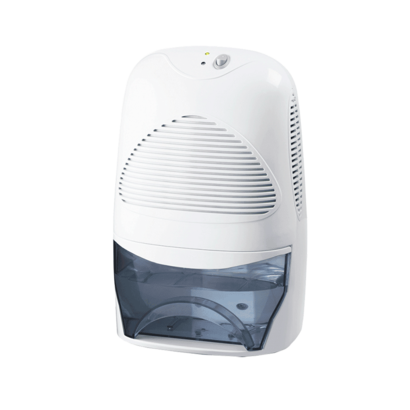
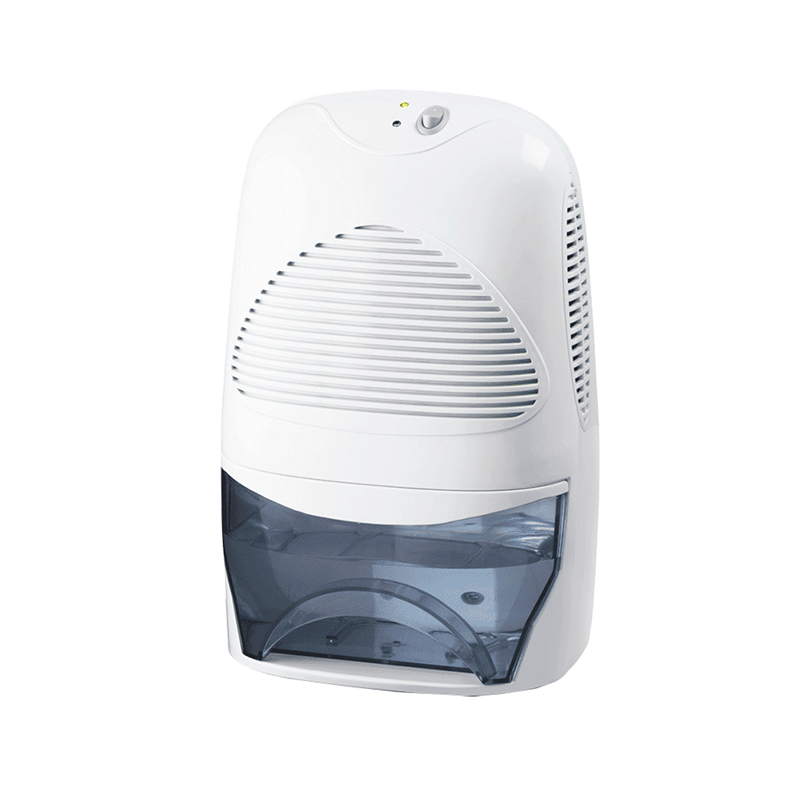 LG-203 Certified Compact Dehumidifier In damp basements or humid summers, moisture competes with gases for carbon pore space and shortens filter life. This thermo-electric dehumidifier helps keep humidity in a comfortable band so the carbon stage can work undisturbed. View Product →
 Rules of thumb help, but usage context decides the calendar. The columns below gather the intervals we see most often for combined HEPA and carbon cartridges in ordinary homes.
The columns translate the saturation curve into calendar time for four common environments. A light-use bedroom, where the purifier mostly handles nighttime air, can stretch a cartridge toward six months. An average living room with regular cooking nearby lands closer to four. A space that opens onto a busy kitchen saturates around the three-month mark, because frying vapors are rich feed for carbon. A household with indoor smokers should plan on roughly two months, and no filter should be treated as permission to smoke indoors. Use your nose as the final referee: when faint odors return at startup, the curve has already steepened.
When you compare machines, look past the word carbon on the box and ask what is actually inside. Five checks separate a serious carbon stage from a decorative one:
These details are exactly what our engineers tune when developing purifiers for international brands, and you can browse the full air purifier range to see how different platforms package granular carbon with mechanical filtration. A full-size unit suits a living room that fights both particles and odors at once.
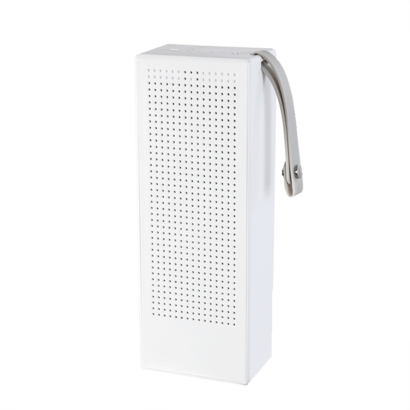
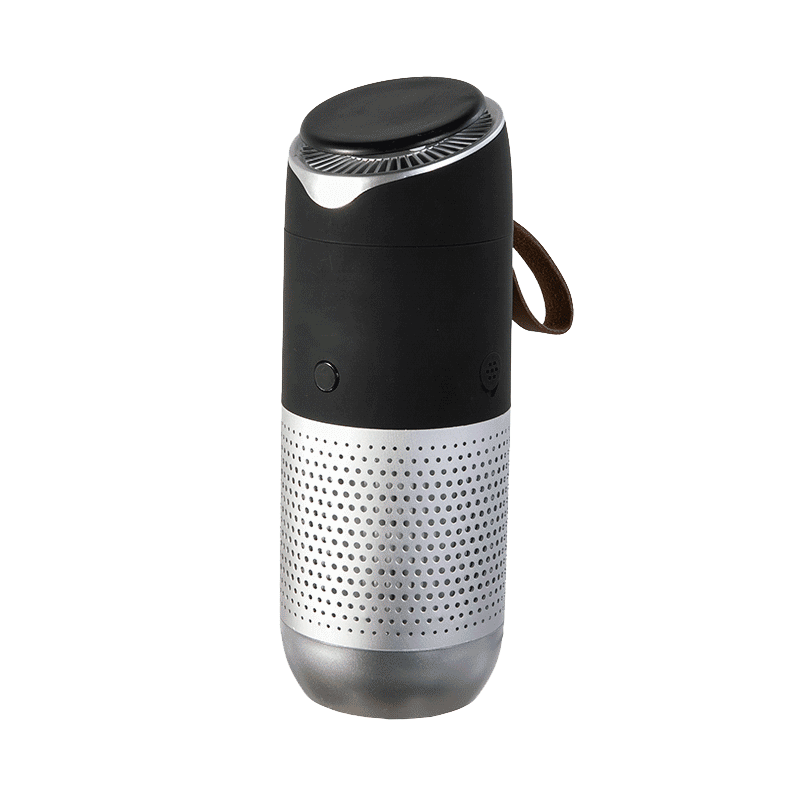 Smart Car Air Purifier from China A compact unit suited to small spaces like a car interior or personal area, where targeted odor and gas control matters. It complements full-size purifiers that handle larger rooms fighting both particles and odors. View Product →
 For desks, dorm rooms and nightstands, the same chemistry in a compact rechargeable body covers the corner of the room where you actually sit, as long as the carbon load is honest for the space.
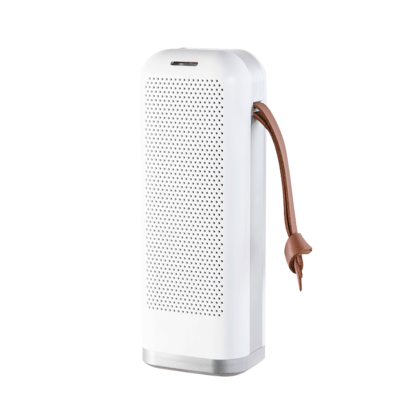
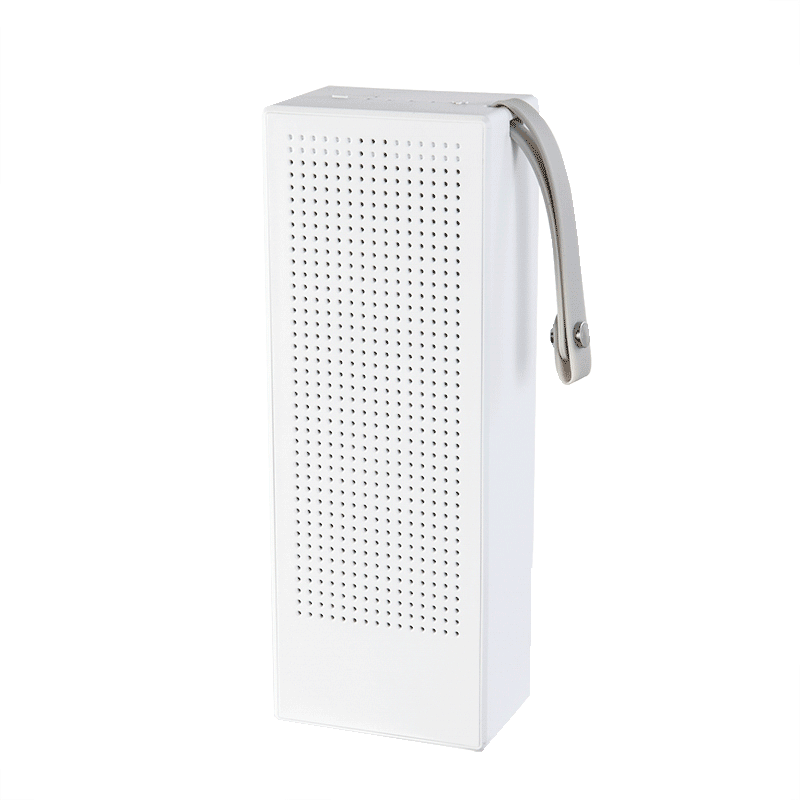 Portable Rechargeable Air Purifier RAP-02 With an H12 HEPA filter plus carbon filter and three speeds including sleep mode, this rechargeable purifier combines particle and gas filtration for desks, dorm rooms and nightstands where you actually sit. View Product →
 The radar view compares the three layers found in most purifiers on an illustrative scale from weak to strong. The active carbon profile spikes toward gas and odor removal and collapses toward particle removal, which is nearly the mirror image of the HEPA shape. The HEPA profile towers over fine particles and tolerates humidity well, because glass fibers do not care whether the air is damp. The washable pre-filter offers long service life and almost no airflow penalty, yet it barely touches gases, so it works as a bodyguard for the layers behind it rather than a standalone answer. No single layer wins everywhere, which is why the real buying decision is matching the tallest spikes on this chart to the pollution you actually have. A kitchen-heavy apartment needs the carbon spike, a pollen-heavy bedroom needs the HEPA spike, and most homes need the combination.
The bottom line is simple. Buy carbon for gases and odors, buy HEPA for particles, and budget for replacement filters the way you budget for coffee, as a recurring cost that keeps the promise alive. Check the carbon weight, protect the pores with a pre-filter, keep spares sealed, and let your nose confirm what the calendar suggests. Treated this way, an active carbon filter does its quiet chemistry reliably for months at a stretch, and Friday fish stays in the kitchen where it belongs.

@2020. CIXI XIATIAN ELECTRICAL APARIANCES CO. , LTD. Vse pravice pridržane. Proizvajalci električnih ventilatorjev na debelo



 angleščina
 한국어
한국어